





Why Fall Protection Is Critical in Construction and Industrial Work
Walk onto any major construction site in Abu Dhabi and look up—you’ll see workers operating at heights that most people wouldn’t feel comfortable standing near, let alone working from. Scaffolding, elevated platforms, rooftops, steel structures—these are everyday workspaces for thousands of workers. And while the view might be impressive, the risk is very real.
Falls from height remain one of the leading causes of serious injuries and fatalities worldwide. What makes them particularly dangerous is how quickly they happen. There’s rarely a warning, no second chance to react. One misstep, one unstable surface, or one moment of distraction is enough. That’s why fall protection equipment in Abu Dhabi isn’t just another safety requirement—it’s a life-saving necessity.
In many cases, accidents don’t happen because equipment is missing. They happen because the wrong system is used, or the right system is used incorrectly. This is where understanding fall protection becomes crucial. It’s not just about wearing a harness—it’s about using a complete system that works together seamlessly.
The Real Risks of Working at Height
Working at height introduces a unique kind of risk—one that combines gravity, environment, and human factors all at once. Even a fall from a relatively low height can result in broken bones, head injuries, or worse. The higher the elevation, the more severe the consequences.
In Abu Dhabi, construction projects often involve high-rise buildings and complex structures, increasing both the frequency and severity of fall risks. Add environmental factors like wind, heat, and dust, and the challenge becomes even greater. These conditions can affect balance, visibility, and overall stability.
What’s often overlooked is how routine tasks can become dangerous when performed at height. Something as simple as carrying tools or adjusting equipment can shift a worker’s center of gravity, increasing the risk of a fall. This is why fall protection isn’t just for high-risk tasks—it’s for any situation where a fall is possible.
Regulations and Safety Expectations in Abu Dhabi
Abu Dhabi has strict safety regulations when it comes to working at height. Employers are required to conduct risk assessments and implement control measures to minimize fall hazards. Whenever possible, engineering controls like guardrails and barriers should be used. But when those aren’t feasible, personal fall protection equipment becomes mandatory.
Compliance isn’t just about ticking boxes—it’s about creating a system that actually works in real-world conditions. Authorities expect companies to provide proper equipment, ensure correct usage, and maintain it regularly. Failure to meet these expectations can result in penalties, project delays, and most importantly, increased risk to workers.
Core Components of a Fall Protection System
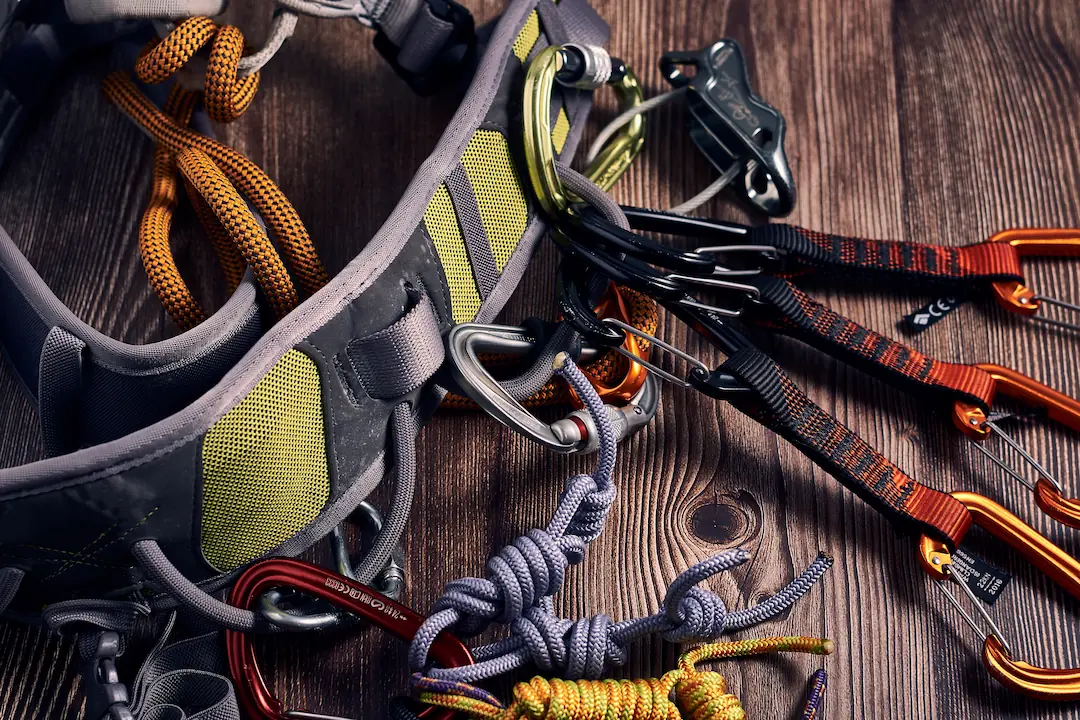
A common misconception is that fall protection starts and ends with a harness. In reality, a harness is just one part of a much larger system. For fall protection to work effectively, multiple components must function together as a single unit.
Safety Harnesses
The safety harness is the foundation of personal fall protection. It distributes the force of a fall across the body, reducing the risk of serious injury. Modern harnesses are designed to be adjustable, comfortable, and compatible with other equipment.
A well-designed harness should fit properly without restricting movement. If it’s uncomfortable, workers are less likely to wear it correctly, which defeats its purpose.
Lanyards and Connectors
Lanyards act as the link between the harness and the anchor point. They come in different types, including shock-absorbing lanyards, which reduce the impact force during a fall.
Connectors, such as carabiners and hooks, ensure secure attachment. These small components play a big role—if they fail, the entire system fails.
Anchor Points
An anchor point is only as strong as the structure it’s attached to. It must be capable of supporting the forces generated during a fall. Poorly positioned or weak anchors are a major cause of system failure.
Proper placement is just as important as strength. The goal is to minimize fall distance and prevent swing hazards.
Lifelines and Mobility Systems
Lifelines allow workers to move freely while remaining connected. They can be horizontal or vertical, depending on the application. These systems are especially useful for large structures where mobility is essential.
Types of Fall Protection Equipment
Personal Fall Arrest Systems
These systems are designed to stop a fall after it occurs. They include a harness, lanyard, and anchor point working together to arrest the fall safely.
Fall Restraint Systems
Instead of stopping a fall, these systems prevent workers from reaching the edge in the first place. They are often preferred because they eliminate the risk entirely.
Work Positioning Systems
These systems support workers while they perform tasks at height, allowing them to maintain stability and focus on their work.
Rescue and Retrieval Equipment
Stopping a fall is only part of the solution. Workers must be rescued quickly to prevent further complications such as suspension trauma. Rescue equipment ensures safe and timely retrieval.
Importance of Proper Harness Fit
An ill-fitting harness is one of the most common issues on worksites. If it’s too loose, it won’t provide proper support during a fall. If it’s too tight, it becomes uncomfortable and discourages use.
Proper fitting involves adjusting straps to ensure a secure yet comfortable fit. Regular checks should be part of daily routines.
Rescue Planning and Emergency Preparedness
One of the most overlooked aspects of fall protection is what happens after a fall. Without a proper rescue plan, a worker can remain suspended for extended periods, leading to serious health risks.
Effective rescue planning includes trained personnel, readily available equipment, and clear procedures. It’s not something to figure out in the moment—it must be prepared in advance.
Compliance with UAE Safety Standards
Employers must ensure that all fall protection equipment meets recognized standards and is used correctly. Regular inspections and training are essential for maintaining compliance.
Inspection, Maintenance, and Storage
Equipment should be inspected before each use and maintained properly. Damaged components must be replaced immediately.
Why Training and Equipment Quality Matter
High-quality equipment and proper training go hand in hand. Even the best gear won’t protect workers if it’s used incorrectly.
Conclusion
Fall protection equipment is a critical part of workplace safety in Abu Dhabi. By using the right systems, ensuring proper fit, and planning for emergencies, businesses can significantly reduce risks associated with working at height.
FAQs
1. What is the most important part of fall protection?
All components are important, but the system must work together as a whole.
2. How often should equipment be inspected?
Before each use and periodically by trained personnel.
3. Is a harness enough for fall protection?
No, a complete system including anchors and lanyards is required.
4. What is suspension trauma?
A condition that occurs when a worker is left hanging in a harness for too long.
5. Why is rescue planning important?
It ensures workers can be retrieved quickly and safely after a fall.