





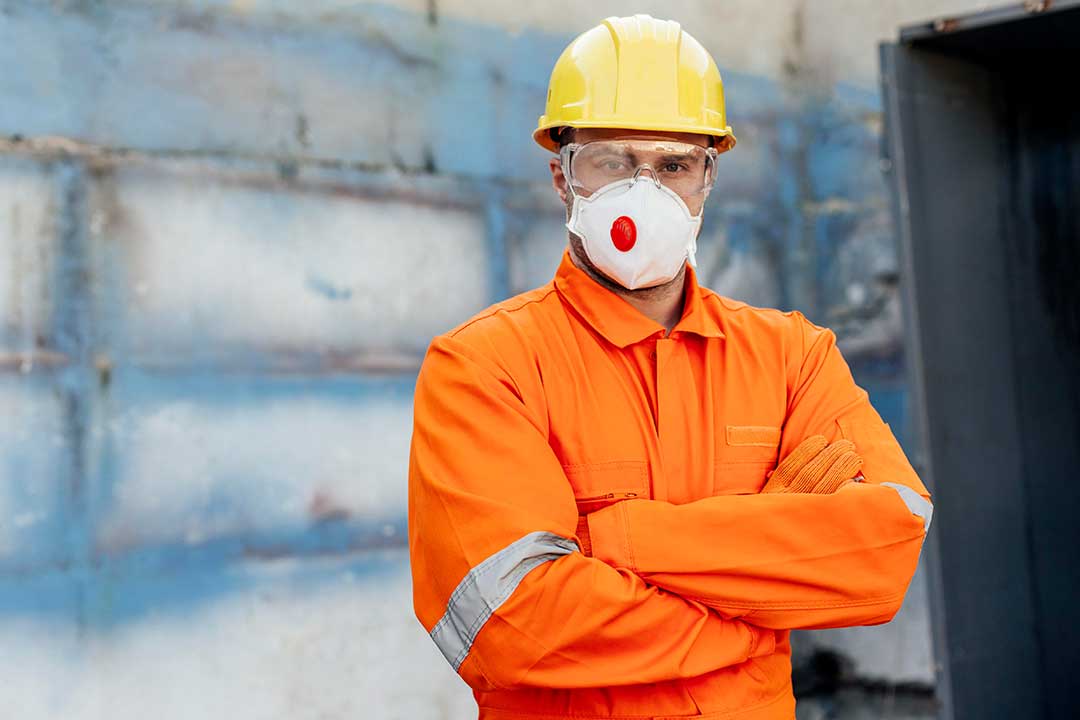
Walk through a construction site, a chemical processing plant, or a sandblasting operation in Abu Dhabi, and the air workers are breathing is rarely clean. Dust, chemical vapours, welding fumes, and fine particulates are daily realities across many industrial environments in the UAE.
Respiratory protection is the last line of defence against these hazards — and it's one area where choosing the wrong product doesn't just mean a compliance issue. It can mean serious, long-term health consequences for workers.
Why Respiratory Hazards Deserve More Attention
Unlike a cut or a fall, the damage caused by inhaling hazardous substances often takes years to manifest. Conditions like silicosis (from silica dust), occupational asthma, and chronic obstructive pulmonary disease (COPD) develop gradually. By the time symptoms appear, significant and irreversible lung damage may already have occurred.
In Abu Dhabi's industrial landscape, the main respiratory hazards include:
- Construction dust, including silica-containing materials from concrete and stone cutting
- Chemical vapours from solvents, coatings, and cleaning agents
- Welding fumes — a mix of metallic particles and gases
- Hydrocarbon vapours in oil and gas environments
- Sand and fine particulates from outdoor work and desert conditions
Each of these requires a specific type of respiratory protection. Picking the wrong one — or defaulting to a basic dust mask when a chemical respirator is needed — provides a false sense of security without the actual protection.
Types of Respiratory Protection
Disposable Filtering Facepieces (FFP Masks) These are the lightweight, single-use masks most people are familiar with. They're classified into three protection levels:
- FFP1 — filters at least 80% of airborne particles. Suitable for nuisance dust with low health risk.
- FFP2 — filters at least 94% of particles. The standard for construction dust, including silica. Equivalent to the N95 in the American system.
- FFP3 — filters at least 99% of particles. Required for the highest-risk environments, including asbestos handling and certain chemical exposures.
A common mistake on worksites is using FFP1 or standard surgical masks in environments that require FFP2 or higher. This is a compliance failure and a genuine health risk.
Half-Face Reusable Respirators These cover the nose and mouth and use replaceable filter cartridges. The advantage over disposable masks is flexibility — you can change the filter type depending on the hazard. A cartridge designed for organic vapours handles chemical environments; a particulate filter handles dust.
Half-face respirators are a practical choice for workers who regularly move between different hazard zones or whose exposure profile changes throughout the day.
Full-Face Respirators These cover the entire face, providing both respiratory and eye protection in a single unit. Used in high-concentration chemical environments, confined space entry, and any situation where eye exposure is also a risk alongside inhalation hazards.
Reading the Certifications
The two main standards you'll encounter in the UAE market:
EN 149 — the European standard for disposable filtering facepieces. Products are marked FFP1, FFP2, or FFP3. Look for the EN 149 mark alongside the protection class.
EN 140 / EN 143 — standards covering reusable half-face respirators and particulate filters respectively. For chemical cartridges, EN 14387 applies.
When sourcing respiratory PPE in Abu Dhabi, always ask for the specific certification documentation. Products that claim compliance without supporting paperwork should not be trusted for worker protection in regulated environments.
Fit Testing — The Step Most Companies Skip
A respirator can only protect a worker if it seals properly to their face. This sounds obvious, but it's consistently overlooked in PPE programmes across the region.
Fit testing is a formal process that verifies a specific respirator model creates an adequate seal for an individual worker's face shape. It's a requirement under most international occupational health standards and should be part of any serious respiratory protection programme.
Workers with facial hair, certain facial structures, or who are using a model that simply doesn't suit their face geometry may not be adequately protected even with a certified product. Fit testing removes this uncertainty.
Practical Considerations for Abu Dhabi Sites
Heat and humidity add complexity to respiratory protection in the Gulf. Workers wearing respirators in high temperatures experience additional fatigue and discomfort — which leads to masks being removed during breaks and not replaced correctly.
Lighter disposable options with exhalation valves reduce heat build-up and are more likely to be worn consistently. For longer-duration tasks, powered air-purifying respirators (PAPRs) can be a worthwhile investment in comfort and compliance.
Getting It Right
Perfactive supplies a full range of certified respiratory protection equipment across Abu Dhabi — from FFP2 and FFP3 disposable masks to reusable half-face respirators and specialist chemical cartridges.
If you're unsure which products are appropriate for your specific hazard environment, our team can help you assess your requirements and match the right solution to your site.