





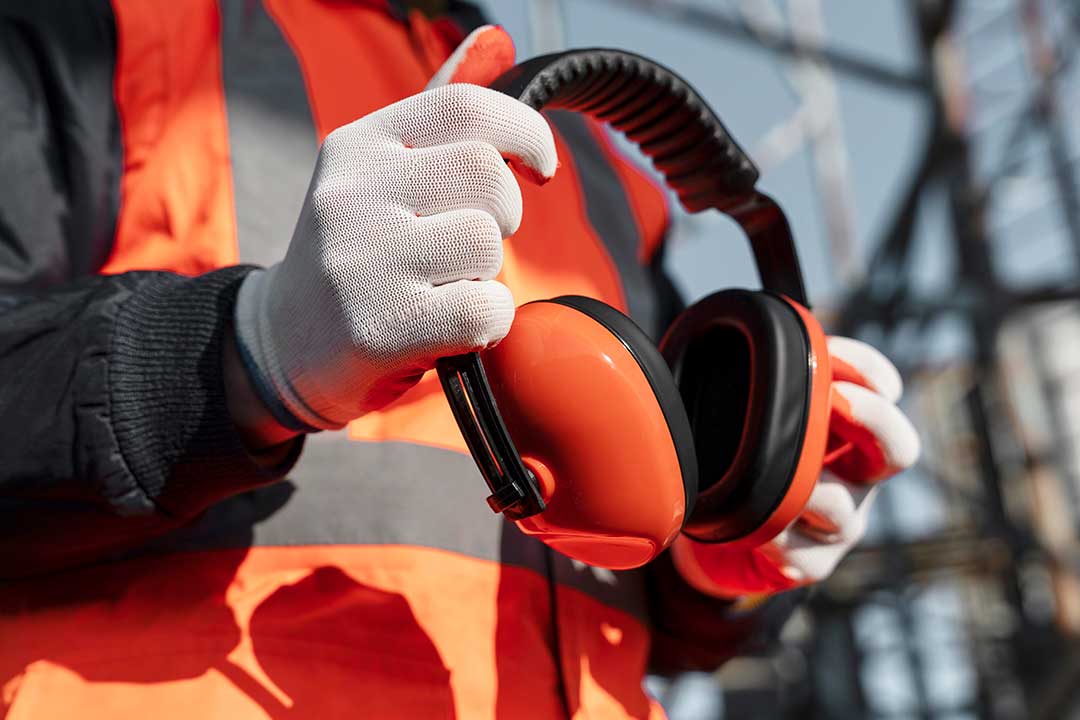
Hearing loss from noise builds up slowly and does not come back, which is why it gets ignored until it is too late. Perfactive is a safety equipment supplier in Musaffah, Abu Dhabi, and we supply ear plugs and ear muffs, along with helmets, gloves, clothing and footwear, to factories, workshops, construction sites and industrial clients across the UAE. The mistake we see most often is one type of hearing protection handed out to everyone, in every area, whatever the noise level. This guide helps you choose properly. For advice on your site, message us on WhatsApp or use our contact page.
Why hearing protection matters
Noise-induced hearing loss rarely announces itself. It starts with small signs:
- Ringing in the ears after a shift
- Muffled hearing at the end of the day
- Asking people to repeat themselves
- Difficulty following conversation in a noisy place
By the time it is obvious, the damage is already done. Hearing protection is cheap compared with the cost of losing a worker’s hearing, and it is far easier to prevent than to treat.
Start with the noise level
Noise is measured in decibels, written as dB(A). Many workplace rules treat around 85 dB(A) averaged over an eight hour shift as the point where hearing protection is needed. Confirm which limit your client or site HSE plan uses.
Common noisy work includes:
- Metal cutting, grinding and fabrication
- Pneumatic tools and breakers
- Generator rooms and compressor areas
- Stamping, pressing and machining
- Heavy traffic and plant on construction sites
If you are not sure how loud an area is, arrange a noise survey. Guessing leads to workers who are not protected enough, or workers who are protected so much they cannot hear what is going on around them.
How hearing protection is rated
Hearing protectors sold in Europe are tested under EN 352. The label shows an SNR value, which stands for Single Number Rating. A higher number means more noise reduction under test conditions. US products use NRR, which is a different scale, so do not compare the two numbers directly.
The label figure is a best case. In real use, protection is usually lower because of poor fit, worn parts, or glasses, hair and helmets getting in the way. Aim for a protector that brings the level at the ear down to roughly 70 to 80 dB(A), not one that blocks everything.
Too much protection is also a problem. Workers who cannot hear alarms, vehicles or a warning shout are at risk, and they tend to take the protector off.
Ear plugs
Ear plugs sit inside the ear canal. The main types are:
- Foam plugs: roll, insert and let them expand. Low cost, disposable and effective when fitted correctly.
- Pre-moulded plugs: reusable, often on a cord. Easier to insert and remove.
- Detectable plugs: contain a metal part so they can be picked up by detectors, useful in food and packaging plants.
Where ear plugs work well:
- Hot conditions, since they do not trap heat the way muffs do
- Jobs where other gear sits around the head, such as safety glasses, a respirator or a welding helmet
- Workers moving in and out of noisy areas
- Low to medium noise levels
Their limits: they depend on correct insertion, which takes practice. Dirty hands can irritate the ear. They are small and easy to lose.
Ear muffs
Ear muffs cover the whole ear with a cup, held by a headband. Helmet-mounted versions clip onto a safety helmet, which is useful on construction and industrial sites.
Where ear muffs work well:
- Medium to high noise levels
- Short, on and off use, since they go on and come off quickly
- Sites where checking that plugs are fitted correctly is hard
- Workers who do not like having something inside the ear
Their limits: they are hotter in UAE summers, the seal can break with glasses arms or thick hair, and they are bulkier to carry and store.
There are also electronic ear muffs that let normal sounds and speech through and cut off loud noise. These suit jobs where workers need to hear instructions and alarms in a noisy area.
Ear plugs or ear muffs: a quick guide
| Point | Ear plugs | Ear muffs |
| Fit | Needs correct insertion | Easy to put on |
| Comfort in heat | Better | Warmer and sweatier |
| Works with other PPE | Easy | Can clash with glasses or respirators |
| Checking use | Harder to see | Easy to see who is wearing them |
| Best noise range | Low to medium | Medium to high |
| Cost | Low per pair | Higher per unit, reusable |
What about very loud areas?
In very high noise, some sites use plugs and muffs together. This gives more protection than either alone, but the two ratings do not simply add up. If your noise survey shows levels this high, ask your supplier or HSE adviser to help you choose the combination.
How to choose, step by step
- Measure or confirm the noise level in each work area.
- Choose a protector with an SNR that brings the level at the ear to a safe range, not far below it.
- Think about heat, other PPE and how long it is worn.
- Train workers to fit it properly. Most failures come from poor fitting, not poor products.
- Check the condition regularly and replace worn cushions, cups and plugs.
A practical example
A fabrication workshop gives every worker foam ear plugs. The cutting and grinding area is loud, so the plugs help there. But the welders also wear helmets and respirators, and the plugs slip out with sweat. Several welders stop wearing them by midday.
The workshop switches to corded pre-moulded plugs for the welders and helmet-mounted ear muffs for the grinding bay, where noise is higher. Both groups now wear their protection through the whole shift. The fix was matching the product to the task and the conditions, not buying a more expensive product.
What to look for in an ear plugs and ear muffs supplier
- Can you show EN 352 test certificates and SNR values?
- Do you stock plugs, muffs and helmet-mounted options?
- Can you supply consistent models for repeat orders?
- Can you help match products to our noise levels and other PPE?
For the full range of head protection, read our guide to head protection PPE in Abu Dhabi. You can also browse our ear plugs and ear defenders.
Frequently Asked Questions
Many workplace rules set around 85 dB(A) averaged over an eight hour shift as the point where hearing protection is needed. Confirm the exact limit in your client requirements or site HSE plan.
Neither is better in every case. Ear plugs suit hot conditions and jobs with other head gear, while ear muffs are easier to fit and suit medium to high noise. Choose based on the noise level, the heat and what else the worker has to wear.
SNR means Single Number Rating. It shows how many decibels of noise a protector can reduce under test conditions, and a higher number means more reduction. Real protection is usually lower than the label, so fit and condition matter.
Perfactive supplies ear plugs, ear defenders and helmet-mounted ear muffs from Musaffah, Abu Dhabi, to sites across the UAE. Contact us with your noise levels and work type and we will help you choose.
Conclusion
Ear plugs and ear muffs both work, and the right one depends on the noise level, the heat and the rest of the worker’s PPE. Measure the noise, match the protector to each area, and train workers to fit it properly. A protector that people wear for the whole shift is worth more than a higher rated one that stays in a pocket.
If you need help choosing hearing protection for your site, contact Perfactive on WhatsApp or through our contact page.