





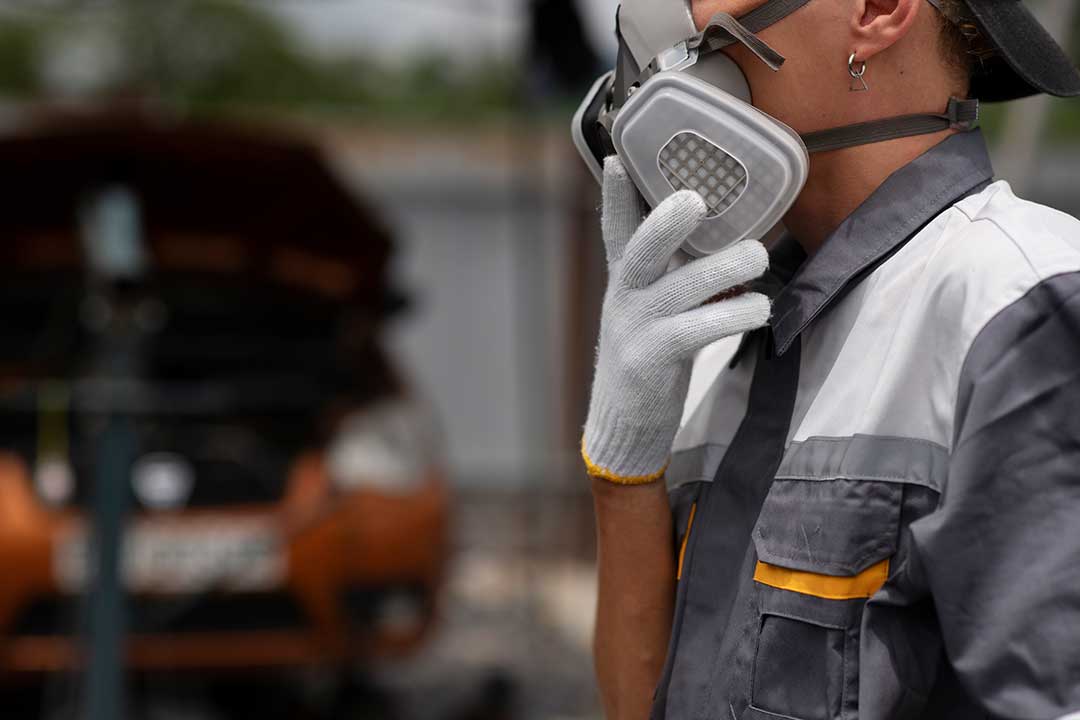
Dust, sand, fumes and vapors are part of daily work on many UAE sites, and the lungs take the damage quietly. Perfactive is a safety equipment supplier in Musaffah, Abu Dhabi, and we supply disposable and reusable respirators, along with gloves, helmets, clothing and footwear, to construction, fabrication and industrial clients across the UAE. A common problem we see is a team using a basic dust mask for a job that needs a different type of respirator altogether. This guide explains the options in plain terms. To get a recommendation for your site, message us on WhatsApp or use our contact page.
Why respiratory protection matters on UAE sites
Many common tasks put harmful material into the air:
- Cutting, grinding and drilling concrete, tiles and blocks
- Sanding, painting and spraying coatings
- Welding and metal cutting
- Cleaning with chemicals
- Working in sandy, dusty outdoor conditions
- Handling insulation, fibers and powders
Breathing these in over months and years can lead to serious lung problems. Respirators reduce what reaches the lungs, but only if the right type is chosen, fitted properly and replaced when needed.
Start with the hazard: particles or gases
This is the most important question, and it is the one most often skipped. Respirators protect against two different groups of hazards.
- Particles: dust, cement, wood dust, fibers, welding fumes and spray mist
- Gases and vapors: solvent fumes, paint vapors, acid gases and ammonia
A respirator built for particles does nothing against vapors. If the hazard is a solvent smell, a dust mask will not help. Always identify what is in the air first, then choose the respirator.
Disposable respirators
Disposable respirators are the molded or folded masks that cover the nose and mouth. In Europe they are tested under EN 149 and divided into three classes:
- FFP1: filters at least 80 percent of airborne particles. For low-risk nuisance dust only.
- FFP2: filters at least 94 percent. A common choice for construction dust, sanding and general industrial work.
- FFP3: filters at least 99 percent. For finer or more harmful particles, including certain welding fumes and hazardous dust.
Some masks have an exhalation valve, which makes breathing out easier and reduces heat build-up. This is useful in UAE conditions. You may also see NR or R on the pack. NR means non-reusable, meant for a single shift. R means it can be reused if it stays clean and undamaged.
Good for: short tasks, visitors, light to moderate dust, and sites where managing reusable masks is hard.
Limits: they filter particles only, they depend on a good seal, and they must be thrown away when damaged, wet or hard to breathe through.
Reusable respirators
A reusable half mask is a rubber or silicone face piece covering the nose and mouth, with filters that can be replaced. Face pieces are tested under EN 140, and the filters are chosen for the hazard.
- P filters (P1, P2, P3): for particles, tested under EN 143.
- Gas filters: tested under EN 14387 and marked by letter. A is for organic vapors such as solvents, B for inorganic gases, E for acid gases and K for ammonia.
- Combined filters: such as ABEK with P3, for jobs with both vapors and particles.
Filters are color coded: brown for A, grey for B, yellow for E, green for K and white for P. This makes it easy to check at a glance that the right filter is fitted.
Full-face respirators cover the eyes as well as the nose and mouth. They suit work where the eyes also need protection from dust, splash or irritating gas.
Good for: long shifts, daily exposure, spraying and coating, and any work with vapors or gases. Over time they often cost less per worker, because you replace filters instead of the whole mask.
Limits: higher upfront cost, and they need cleaning, storage and a system to track filter changes.
Disposable or reusable: a quick guide
| Point | Disposable | Reusable |
| Protects against | Particles | Particles, gases and vapors, depending on filter |
| Upfront cost | Low | Higher |
| Ongoing cost | Replace whole mask | Replace filters |
| Upkeep | None | Cleaning, storage, filter tracking |
| Best for | Short or light dust jobs | Long shifts, vapors, regular exposure |
Fit matters as much as the rating
A respirator only protects if it seals against the face.
- Facial hair: a beard or heavy stubble under the sealing edge lets air leak around the mask. Workers with beards need a different type of respirator.
- Size and model: one mask will not fit every face. Offer more than one size or model.
- Fit checks: do a quick seal check every time the mask is put on, and do a proper fit test when you introduce a new model.
Also remember that respirators filter the air around you. They do not supply oxygen. For confined spaces or low-oxygen areas you need supplied-air equipment, and that is a different type of product.
Looking after respirators
- Store them in a clean, sealed bag or container, away from dust, heat and sun
- Clean reusable face pieces according to the manufacturer’s instructions
- Replace filters when breathing gets harder, when you can smell or taste contaminants, or when the service life is reached
- Replace any mask with a damaged strap, cracked face piece or worn valve
A practical example
A fit-out contractor buys FFP2 masks for a team that sands and then sprays lacquer in the same room. The sanding is covered. The lacquer vapor is not. Workers start complaining of headaches and a strong smell inside the mask, which tells you vapor is getting through.
The contractor switches the spraying crew to reusable half masks with combined A and P filters, and keeps FFP2 masks for the sanding stage. It is a small change that closes a real gap.
What to look for in a safety masks supplier
Ask your supplier:
- Can you provide the EN certificates for each mask and filter?
- Do you stock both disposable and reusable options, and replacement filters?
- Can you help match respirators to the hazards on our site?
- Can you deliver regularly so we do not run out?
For more on the full range of head protection, see our guide to head protection PPE in Abu Dhabi. You can also browse our reusable respirators and disposable respirators.
Frequently Asked Questions
An FFP2 disposable respirator is a common choice for general construction dust such as cutting, grinding and sanding. For finer or more harmful dust, or a more demanding job, use an FFP3 mask or a reusable respirator with P3 filters.
No. A disposable dust mask only filters particles and does not stop solvent vapors. For spraying solvent-based paints you need a reusable respirator with a gas and vapor filter, such as an A-type filter combined with a particle filter.
Change them when breathing gets harder, when you smell or taste contaminants, when they are damaged or wet, or when the manufacturer’s service life is reached. Gas and vapor filters wear out faster in heavy exposure, so track the hours of use.
Perfactive supplies disposable and reusable respirators and replacement filters from Musaffah, Abu Dhabi, to sites across the UAE. Contact us with your task and hazard details and we will help you choose.
Conclusion
Good respiratory protection comes down to three steps: identify what is in the air, pick a respirator and filter built for that hazard, and make sure it fits each worker. Disposable masks suit short, light dust jobs. Reusable respirators suit long shifts and anything with vapors or gases. Get the match right, and look after the equipment.
If you need help choosing respiratory protection for your site, contact Perfactive on WhatsApp or through our contact page.