





Eye injuries on site are quick, painful and often avoidable. A flying chip, a splash or a gust of sand is all it takes. Perfactive is a safety equipment supplier in Musaffah, Abu Dhabi, and we supply safety glasses, goggles and visors, along with helmets, gloves, clothing and footwear, to construction, fabrication and industrial clients across the UAE. A frequent problem we see is a site buying one style of eyewear for every task, and then wondering why workers keep taking it off. This guide helps you match the right eye protection to the job. For advice on your site, message us on WhatsApp or use our contact page.
What eye protection needs to cover
Different jobs put the eyes at risk in different ways:
- Flying particles: from grinding, cutting, chipping, drilling and hammering
- Dust and sand: from construction, demolition and outdoor work
- Liquid splash: from chemicals, cleaning products and paint
- Radiation and glare: from welding, and from strong sun outdoors
- Molten metal and hot solids: in foundries and metal work
No single product covers all of these well. That is why there are glasses, goggles, visors and welding filters, and why the choice matters.
Safety glasses
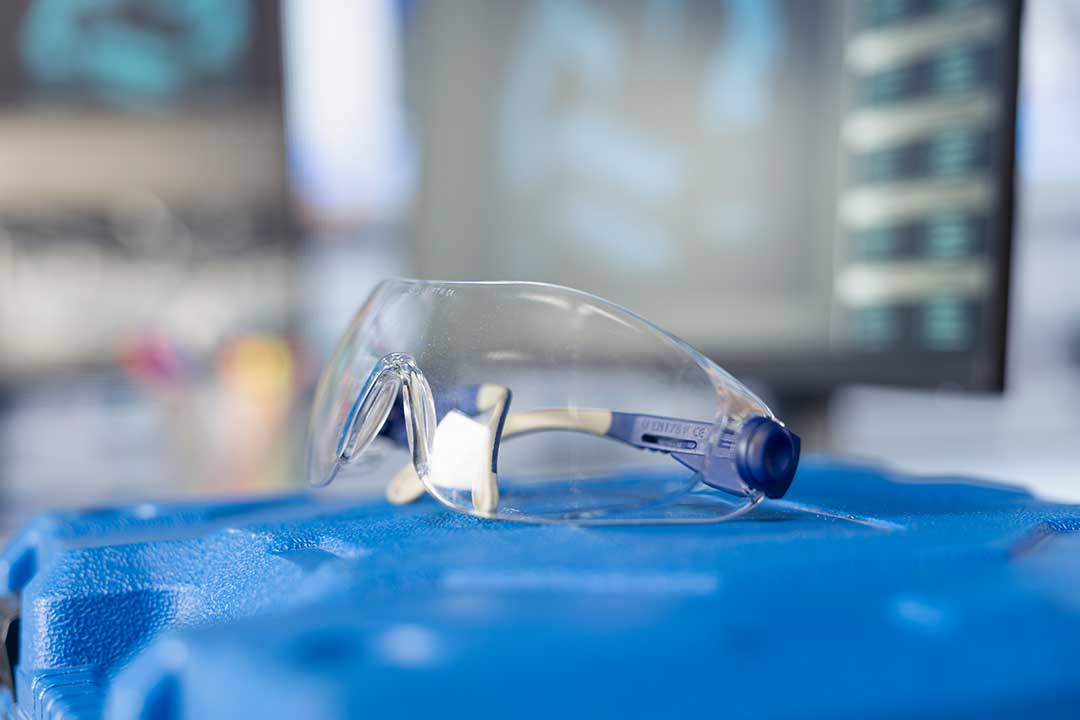
Safety glasses look like regular glasses but have tougher lenses and frames. Many have side shields or a wraparound design.
Good for: general site work, light impact from small particles, drilling, cutting and walking around a site. They are light and comfortable, so workers are more likely to keep them on.
Limits: gaps at the sides and top mean they are not suitable for heavy dust, fine particles or liquid splash. For those, use goggles.
Options worth knowing about:
- Clear lenses: for indoor work and low light
- Tinted or smoke lenses: for strong sun outdoors, with UV protection
- Anti-fog and anti-scratch coatings: very useful in UAE heat and humidity, and in dusty environments
- Over-glasses styles: designed to fit over a worker’s prescription glasses
Safety goggles
Goggles seal around the eyes and are held by a strap. They protect from the front, sides, top and bottom.
Good for: dust and sand, chemical splash, spraying and sanding, and grinding where particles can come from any direction.
Look at the ventilation type:
- Direct vent: has openings that let air in, but not designed for liquid splash
- Indirect vent: has covered vents that keep splash out while allowing some airflow
- Non-vented: fully sealed, for gases, fine dust or hazardous splash
Limits: they can fog up and feel hot, especially in summer. Anti-fog lenses and indirect venting help. Choose a comfortable fit, because goggles that irritate end up in a pocket.
Face shields and visors
A visor covers the whole face, not just the eyes. It is held on a headband or attached to a safety helmet.
Good for: grinding, chipping, cutting, and work where particles, splash or heat could hit the face as well as the eyes.
Limits: a visor is usually worn together with safety glasses or goggles, not on its own. Gaps around the edges mean it may not stop everything reaching the eyes.
Welding eye and face protection
Welding produces intense light and UV and infrared radiation that can damage the eyes in seconds. Welders need a welding helmet or shield with a filter lens of the correct shade for the process and current. Workers nearby also need protection, since arc flash can harm eyes at a distance. Use the manufacturer’s guidance to choose the right shade, and never use ordinary sunglasses as a substitute.
How to read the markings
Safety eyewear sold in Europe is tested under EN 166. You will find markings on the frame and lens. Here is what the common ones mean:
| Marking | What it tells you |
| EN 166 | The standard the product is tested to |
| F | Protects against low energy impact |
| B | Protects against medium energy impact |
| A | Protects against high energy impact |
| 3 | Liquid droplets and splash |
| 4 | Large dust particles |
| 5 | Gas and fine dust |
| 9 | Molten metal and hot solids |
| K | Resistance to scratching from fine particles |
| N | Resistance to fogging |
Lens filters have their own standards. For example, EN 170 covers UV filters and EN 172 covers sun glare filters for industrial use. For welding, filters follow EN 169.
Check the markings against your risk assessment. A pair of glasses marked for low energy impact may not be enough for heavy grinding or chipping.
Choosing eye protection for UAE conditions
- Sun and glare: tinted lenses with UV protection for outdoor work
- Dust and sand: sealed goggles for dusty areas and windy days
- Heat and humidity: anti-fog coatings and good ventilation
- Compatibility: make sure eyewear fits with helmets, respirators and ear defenders. Poor fit with other PPE is one of the main reasons workers remove it
- Prescription wearers: provide over-glasses or prescription safety glasses
A practical example
A construction contractor buys one style of clear safety glasses for the whole site. In the first month, the grinding crew complains of dust getting in their eyes, and outdoor crews take the glasses off because of glare and fogging.
The contractor switches the grinders to indirect vent goggles with a visor for heavy grinding, gives outdoor crews tinted anti-fog glasses, and keeps clear glasses for indoor work. Workers now wear their eye protection because it suits each job.
What to look for in a supplier of industrial protective eyewear
- Can you show EN 166 certification for each product?
- Do you stock glasses, goggles, visors and welding protection?
- Can you supply anti-fog, tinted and over-glasses options?
- Can you keep stock consistent for repeat orders?
For the wider picture on head protection, read our guide to head protection PPE in Abu Dhabi. You can also browse our safety glasses, safety visors and welding eye protection.
Frequently Asked Questions
Safety glasses are light and suit general site work and light impact, but they leave gaps at the sides and top. Goggles seal around the eyes, so they protect better against dust, sand and liquid splash.
EN 166 is the European standard for personal eye protection. The markings on the frame and lens show what the product is tested for, such as impact level, liquid splash, dust, scratch resistance and anti-fog.
Usually not on its own. A visor protects the face, but gaps around the edges can let particles or splash reach the eyes, so it is normally worn together with safety glasses or goggles.
Perfactive supplies safety glasses, goggles, visors and welding eye protection from Musaffah, Abu Dhabi, to sites across the UAE. Contact us with your task details and we will help you choose.
Conclusion
The right eye protection depends on the hazard: glasses for general work, goggles for dust and splash, visors for the whole face, and filtered lenses for welding. Match the product to the task, check the markings, and choose a comfortable fit so it stays on. Eye protection that people wear all shift beats better equipment that gets left in a pocket.
If you need help choosing eye protection for your site, contact Perfactive on WhatsApp or through our contact page.